
Essential Tips for Planning Your Alta Badia Adventure
Alta Badia sits within the Dolomiti Superski network, one of the most extensive ski circuits anywhere in the world, and it draws large crowds — particularly during school holiday periods such as Christmas, February half-term, and Easter. Accommodation, ski instruction, and popular restaurant tables can all be fully reserved months before the season peaks, so early planning pays real dividends.
Choosing Where to Stay
Alta Badia is not a single resort but a collection of six distinct villages, each with its own personality. Corvara and Colfosco sit at the heart of the area, offering excellent access to the Sella Ronda in both directions along with a lively social scene. La Villa and San Cassiano have a more refined character, with some of the finest dining in the region and strong connections to the Lagazuoi area and the Gran Risa. Badia and La Val are quieter and often more affordable, rooted in authentic Ladin culture and ideal for those seeking a more peaceful base.
Lift Passes
The Dolomiti Superski pass covers the full network of lifts and ski buses across all twelve areas. For stays of a week or longer it represents exceptional value, and it is the only option that grants access to the complete Sella Ronda circuit — a local area pass will not suffice for that particular day out.
Travel Insurance
A standard travel policy is not enough for a ski holiday. Make sure your cover includes winter sports comprehensively — this should extend to off-piste skiing if you plan to venture there with a guide, as well as helicopter rescue and medical repatriation.
Understanding the Piste Grading
The colour-coded difficulty system follows the standard alpine convention: green, blue, red, and black in ascending order of challenge. That said, red runs in the Dolomites can carry a sting — some are steep and well-trafficked enough to feel closer to black standard. Always study the piste map before committing to an unfamiliar route.
Grooming and Snow Conditions
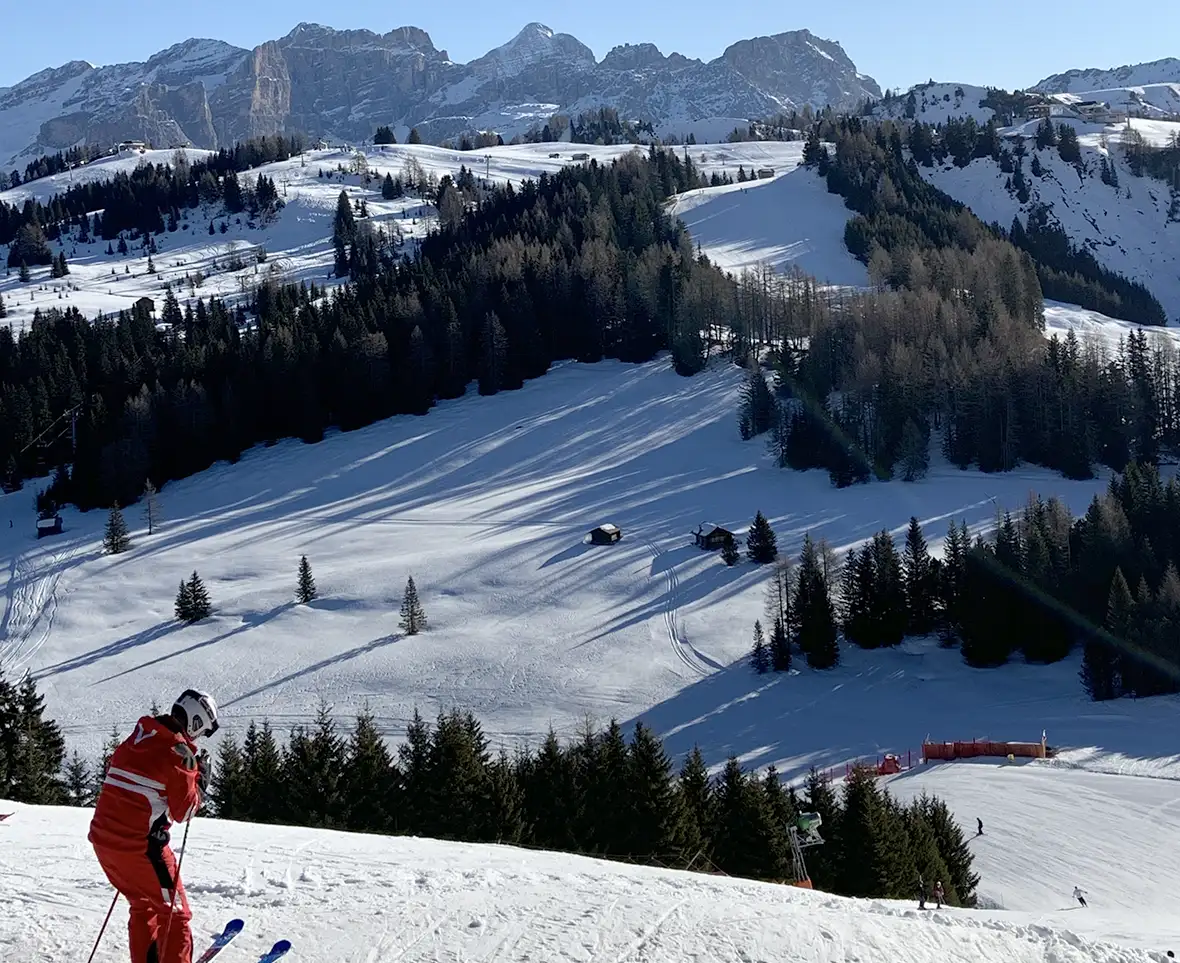
Piste preparation here is taken seriously, and the slopes are worked over each night with impressive thoroughness. First thing in the morning is when the surface is at its absolute best — firm, textured, and fast. Be aware that many runs face south and receive strong sunshine, which can turn the snow soft and heavy by early afternoon, particularly later in the season. A useful strategy is to prioritise south-facing slopes in the morning and shift to north-facing terrain as the day progresses.
Dolomiti Superski Awaits You
The ultimate Italian ski adventure, perfectly planned
From first run to last lift, Adesso Travel crafts your Dolomiti Superski experience with precision and care.
Start PlanningYour adventure begins with a single yes.
Lifts and Queues
The lift infrastructure is modern and well-maintained, with high-speed gondolas and chairlifts forming the backbone of the network. That said, certain key junctions — the Piz Sorega bubble from San Cassiano being a notable example — can see significant queues between around ten and half past eleven in the morning. An early start makes a meaningful difference.
The Ski Bus
The valley’s ski bus network is free with a valid lift pass, reliably punctual, and genuinely useful for reaching different starting points or returning to your hotel after skiing into a different village. It is underused by visitors and well worth taking advantage of.
Food and Drink on the Mountain
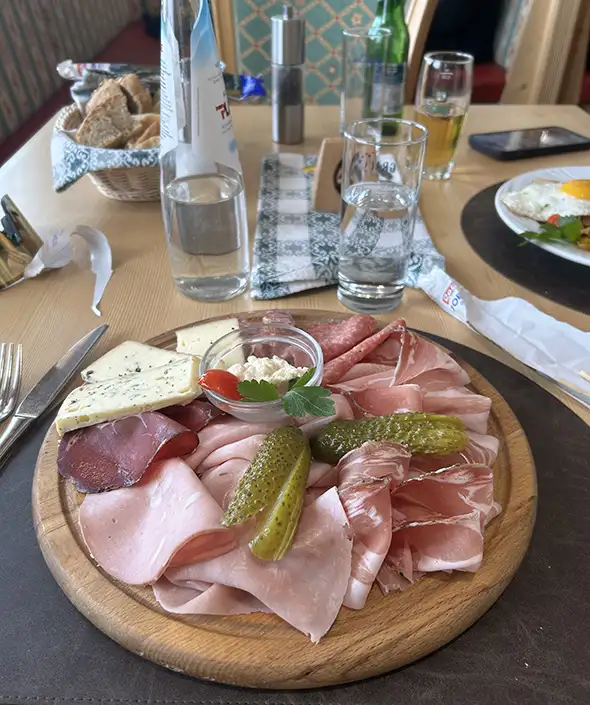
The rifugio culture of Alta Badia is one of the things that genuinely sets it apart from other ski destinations. Eating lunch at a mountain hut rather than a base-station café is not just recommended — it is part of what makes a day here complete. Booking ahead is strongly advised for the better-known ones.
Regional dishes worth seeking out include casunziei, the local Ladin pasta filled with beetroot and dressed with butter and poppy seeds; barley soup, a robust and warming staple; speck, the locally cured smoked ham often paired with regional cheeses; and polenta served alongside wild mushrooms, cheese, or goulash. For something sweet, Kaiserschmarrn — a shredded pancake served with lingonberry — is hard to beat.
On the drinks front, explore the wines of South Tyrol: Lagrein and Kerner are both excellent. And at some point during the week, order a Bombardino — a warm egg liqueur that has become something of a mountain institution and is perfectly suited to a mid-slope break in the sun.
For those with a serious interest in food, keep an eye out for events associated with the Alta Badia Gourmet Ski Safari, during which Michelin-starred chefs prepare special menus at various rifugios across the area.
After Skiing and Beyond the Pistes
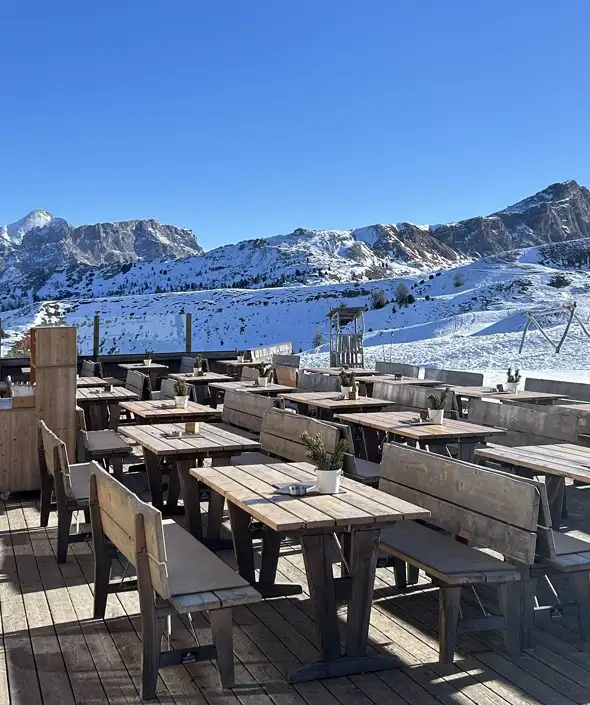
Après-ski in Alta Badia tends toward relaxed terrace culture — a spritz in the sunshine rather than anything rowdier — which suits the mood of the place well.
Away from skiing entirely, the valley offers a surprisingly rich range of winter activities. Snowshoe trails wind through quiet forest, and an extensive network of cleared paths makes winter walking genuinely enjoyable — the Val di Udai near La Villa is particularly worth exploring. Cross-country skiing loops run through La Villa and San Cassiano, and the 7.5-kilometre sled run descending from Piz La Ila to Corvara is a favourite for families. For something more dramatic, helicopter tours over the Dolomites are available when weather permits.
Practical Information
- Language: The area is home to three languages — Ladin is the native tongue, with Italian and German both widely spoken. English is used comfortably throughout hotels, restaurants, and tourist areas.
- Money: The currency is the euro. Cards are accepted in almost all establishments, though carrying a small amount of cash is sensible for mountain huts and car parks.
- Tipping: There is no obligation to tip, but rounding up a bill or leaving a few euros after good service is a appreciated gesture. For an outstanding meal at a rifugio, somewhere between five and ten percent is considered generous.
- What to Pack: Sun protection is non-negotiable at altitude — high-SPF sunscreen and lip balm are essential, as snow reflection amplifies UV exposure considerably. Quality goggles and sunglasses are needed for all conditions, not just bright days. Layering is the most practical approach to clothing: a merino wool base, a mid-layer fleece, and a windproof and waterproof outer shell. A helmet is now compulsory on all pistes.
- Getting There: The most convenient airports are Innsbruck, Bolzano, and Venice Marco Polo. Munich is a strong alternative with a transfer of around three hours. Pre-booking a shared shuttle or private transfer is advisable; having your own hire car adds useful flexibility for days spent exploring the valley. Current private transfer costs run to approximately €750 from Munich for a group of four to six, and around €400 from Venice. Hotel parking is generally available, though spaces near the lifts fill quickly.
Alta Badia FAQs
When should I book my Alta Badia ski holiday?
As early as possible. Accommodation, ski lessons, and popular restaurants fill up months ahead, especially during Christmas, February half-term, and Easter.
Which village in Alta Badia should I stay in?
Corvara and Colfosco are best for Sella Ronda access and nightlife. La Villa and San Cassiano suit food lovers. Badia and La Val are quieter and more affordable.
Does the Dolomiti Superski pass cover everything?
Yes — all lifts, ski buses, and all twelve areas including the full Sella Ronda circuit. A local area pass will not cover the complete circuit.
Do I need special travel insurance for skiing?
Yes. Standard travel insurance is not sufficient. You need a policy that covers winter sports, off-piste skiing, helicopter rescue, and medical repatriation.
When is the best time to ski the slopes?
First thing in the morning when pistes are freshly groomed and firm. South-facing runs soften quickly in the afternoon sun.
How do I avoid long lift queues?
Start early. Key lifts like Piz Sorega get busy between 10am and 11:30am.
Is the ski bus worth using?
Absolutely — it's free with your lift pass, reliable, and great for reaching different villages or returning to your hotel.
What should I eat on the mountain?
Try casunziei, barley soup, speck, polenta, and Kaiserschmarrn. Wash it down with a Bombardino or a local South Tyrolean wine.
What should I pack for Alta Badia?
High-SPF sunscreen, quality goggles, merino base layers, a fleece mid-layer, waterproof outer shell, and a helmet — now compulsory on all pistes.
Which airports are closest to Alta Badia?
Innsbruck, Bolzano, and Venice Marco Polo are the most convenient. Munich works well too at around three hours by transfer.
Recent Posts
An Epic Italian Ski Circus: Dolomiti Superski
For more than a quarter century, our yearly journey to Alta Badia has grown into...
Read More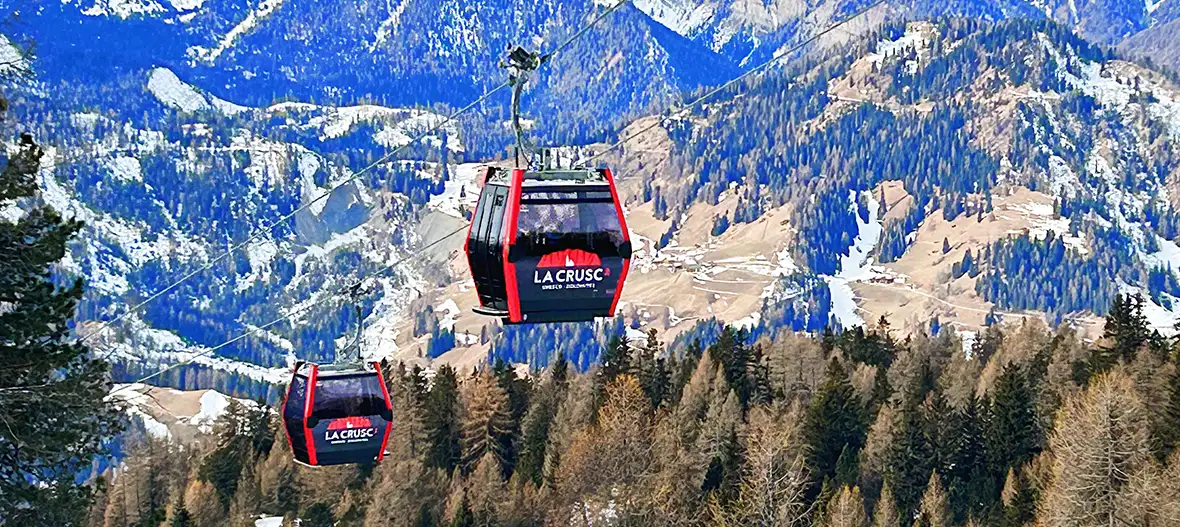
Essential Tips for Planning Your Alta Badia Adventure
Alta Badia sits within the Dolomiti Superski network, one of the most extensive ski circuits...
Read More